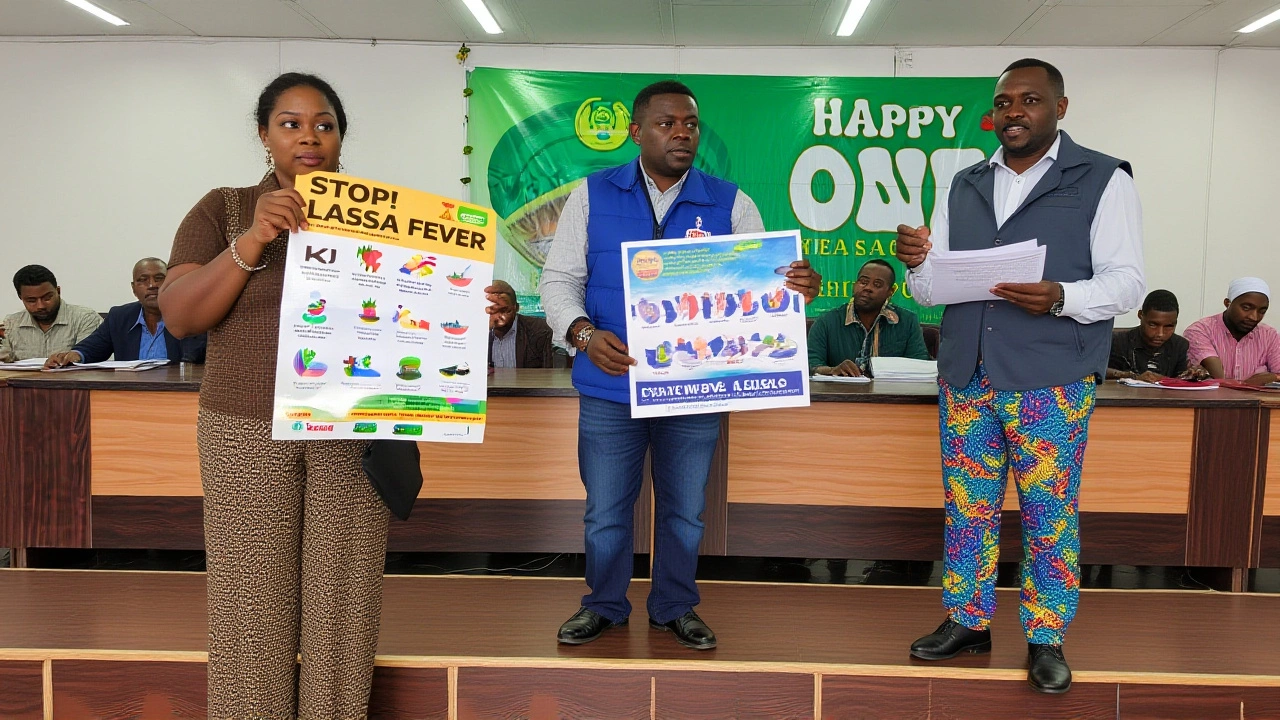
It’s a virus that hides in plain sight, carried by rats and spreading through the very food staples Nigerians rely on daily. But the most effective weapon against Lassa fever isn’t just medical—it’s human. In an effort to curb outbreaks across West Africa, health authorities are turning away from top-down mandates and toward a strategy that feels surprisingly old-school: trusting the people who already hold the ear of the community.
The shift marks a critical evolution in how Nigeria Centre for Disease Control and Prevention (NCDC) and its partners approach public health. Instead of relying solely on sterile brochures or distant radio announcements, they’re mobilizing traditional rulers, religious leaders, and market association heads to deliver life-saving messages. Here’s why this grassroots pivot is becoming the backbone of Nigeria’s disease control strategy.
The Endemic Reality of Lassa Fever
To understand the urgency, you have to look at where the virus lives. Lassa fever is an acute viral haemorrhagic disease caused by contact with urine or faeces of infected multimammate rats (*Mastomys* species). It’s not a rare visitor; it’s endemic in several Nigerian states, particularly Edo State, Ondo State, and Ebonyi State.
The transmission route is deceptively simple. Rats contaminate household items or food stores. People eat contaminated food—often garri (cassava granules) dried on the floor—or touch contaminated surfaces. Then they get sick. The symptoms can be mild, like a flu, but for about one in ten patients, it progresses to severe bleeding and organ failure. During peak transmission seasons, which typically span the dry months from late year into the first quarter, hospitals in these regions see a surge in cases. That’s when the pressure mounts on local health systems.
Who Are the Trusted Voices?
So, who steps in when fear spreads faster than facts? The answer lies in existing social structures. Health officials aren’t hiring new messengers; they’re empowering those already present.
- Traditional Rulers: Village heads and chiefs who command respect and attention during town hall meetings.
- Religious Leaders: Imams and pastors who reach thousands weekly through sermons.
- Market Association Leaders: Influential figures who dictate norms in busy trading centers.
- Community Health Workers: Local extension workers who live in the same neighborhoods as their patients.
The logic is straightforward. A message about storing food in sealed containers lands differently when it comes from a stranger in a white coat versus the imam you’ve known since childhood. These trusted voices speak the local languages—Yoruba, Igbo, Hausa, and numerous dialects—and understand the cultural nuances that make certain advice acceptable or taboo.
From Theory to Practice: How It Works
The process isn’t accidental. It’s a coordinated effort led by the NCDC, headquartered in Abuja, and supported by international bodies like the World Health Organization (WHO).
First, technical experts develop standardized risk communication materials. These aren’t generic warnings; they’re specific behavioral instructions. For example: “Do not dry garri on the ground.” “Store grain in metal bins with tight lids.” “Seek care immediately if you have a fever in an endemic area.”
Next, state ministries of health train local educators and community leaders. They don’t just hand over flyers; they explain the science behind the recommendations so leaders can answer questions confidently. Then, the real work begins. Leaders integrate these messages into their regular activities. A pastor might weave a warning about rodent control into a Sunday sermon. A women’s group leader might demonstrate safe food storage during a monthly meeting. Radio stations, often consulted during planning phases, broadcast talk shows at times when listeners are most engaged.
This approach acknowledges a hard truth in public health: information alone doesn’t change behavior. Trust does.
Why This Matters Beyond Lassa Fever
The impact of this strategy ripples far beyond reducing Lassa fever cases. When communities see that their leaders are actively involved in health promotion, and when those leaders receive feedback from residents, a two-way street of trust is built. This strengthens the entire health system.
If a community trusts the health worker who visited them during a Lassa fever campaign, they’re more likely to accept vaccination drives for other diseases later. They’re more likely to report unusual symptoms early. Conversely, if authorities only show up during emergencies and disappear afterward, that trust erodes. Sustained engagement turns temporary crisis response into long-term resilience.
Data collection supports this. Officials track process indicators—how many leaders were trained, how many radio spots aired—but also behavioral outcomes. Are households buying rodent-proof containers? Are patients arriving at clinics earlier with suspected symptoms? While specific percentages vary by state and season, the trend points toward improved compliance when community voices lead the charge.
What’s Next for Nigeria’s Health Strategy?
As Nigeria continues to battle Lassa fever, the focus will remain on integrating these community networks into formal incident management systems. During outbreaks, Emergency Operations Centres activate dedicated risk communication pillars. The goal is to ensure that misinformation is corrected rapidly and that messages are tailored to local contexts in real-time.
Future efforts will likely deepen the collaboration between national agencies like the NCDC and local stakeholders. The aim isn’t just to stop one virus, but to build a culture of health awareness that persists long after the headlines fade. For millions of Nigerians, the difference between life and death may well depend on whether their neighbor, their pastor, or their chief hears the right message—and passes it on.
Frequently Asked Questions
How is Lassa fever transmitted in Nigeria?
Lassa fever is primarily transmitted through contact with urine or faeces of infected multimammate rats. Humans often contract the virus by eating foodstuffs like garri that have been contaminated by rodents, or by touching household items exposed to rat waste. Person-to-person transmission can also occur in healthcare settings if infection prevention protocols are not strictly followed.
Which organizations are leading the prevention efforts?
The primary agency responsible is the Nigeria Centre for Disease Control and Prevention (NCDC), working under the Federal Ministry of Health and Social Welfare. They collaborate closely with state ministries of health in endemic areas like Edo and Ondo States. International partners, including the World Health Organization (WHO) and the Africa Centres for Disease Control and Prevention (Africa CDC), provide technical support and funding.
Why are community leaders more effective than official announcements?
Community leaders such as traditional rulers and religious figures already possess established trust within their congregations and villages. They communicate in local languages and understand cultural practices, allowing them to frame health messages in ways that resonate personally. This trust reduces skepticism and encourages immediate action on prevention measures like proper food storage.
What specific behaviors help prevent Lassa fever?
Key preventive behaviors include storing all food in tightly covered, rodent-proof containers; keeping homes and surroundings clean to discourage nesting; avoiding drying food on the ground; and refraining from hunting or consuming rodents. Additionally, seeking early medical care for fever symptoms in endemic areas is crucial to reduce severity and prevent further spread.
When are Lassa fever outbreaks most common?
Outbreaks typically peak during the dry season, which usually runs from late December through March. During this period, water sources become scarce, driving rats closer to human dwellings in search of food and water, thereby increasing the risk of contamination and transmission.