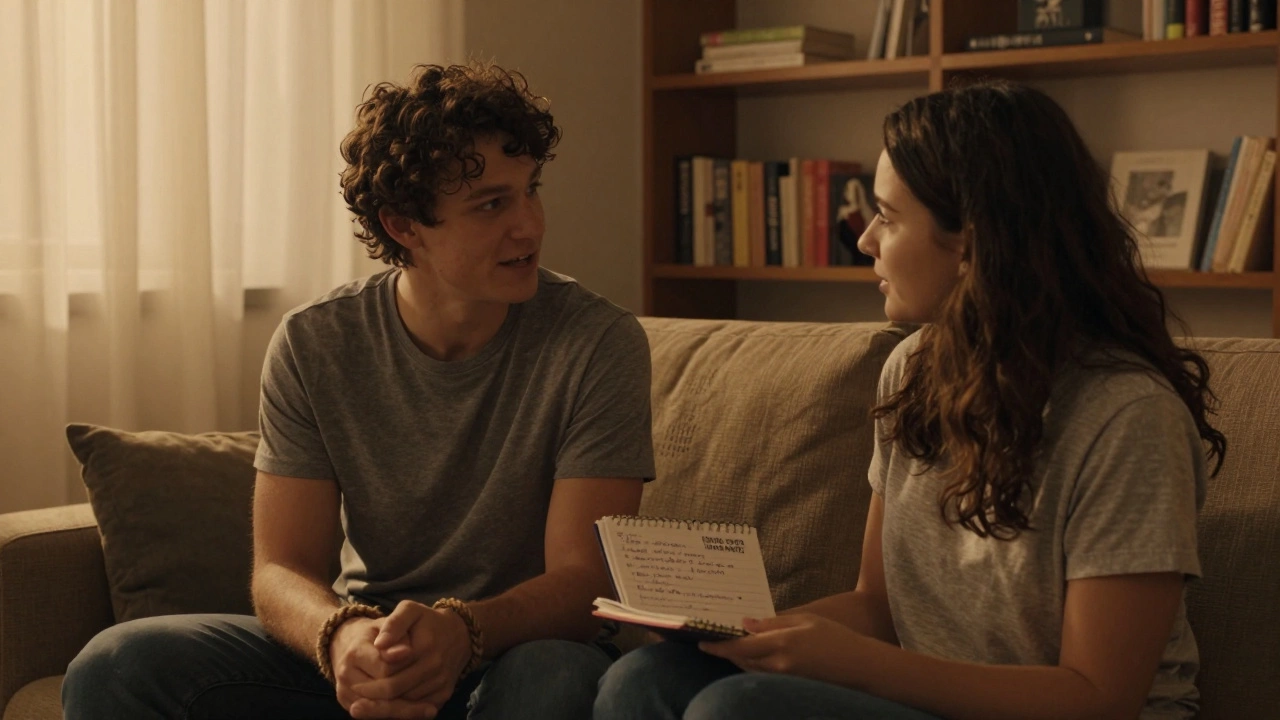
Twenty years ago, talking about kink in public meant whispering behind closed doors. Today, it’s on Netflix, in podcasts, and even in workplace diversity trainings. The shift isn’t just about more people doing unconventional things-it’s about how society stopped treating those things as broken, dangerous, or shameful. Kink, once locked in the margins of sexual culture, is now being examined, discussed, and normalized by therapists, educators, and everyday people who just want to understand themselves better.
Part of this change came from visibility. Online communities gave people a safe space to explore without judgment. Reddit threads, Discord servers, and niche forums became digital town halls where people shared boundaries, consent practices, and personal stories. One of the most surprising outcomes? The rise of ethical kink as a model for healthy communication. If you can negotiate a bondage scene with clear safewords and aftercare, you’re already practicing skills most couples never learn. It’s no coincidence that relationship coaches now teach these principles to non-kinky couples. The same honesty that keeps a Dom and sub safe during a scene also prevents resentment in everyday life. For some, this clarity is life-changing. Others turn to services like escort vip dubai not for the act itself, but for the structured, consensual environment it offers-something that’s hard to replicate in casual encounters.
What Exactly Is Kink?
Kink isn’t one thing. It’s a spectrum. It includes bondage, roleplay, impact play, sensation play, power exchange, fetish wear, and more. The key isn’t the activity-it’s the context. Kink is consensual, informed, and often ritualized. It’s not about pain for pain’s sake. It’s about control, surrender, trust, or sensory intensity. A person who enjoys being tied up might not like being spanked. Someone who loves wearing leather might never want to be called a slave. These aren’t checkboxes on a checklist-they’re personal expressions of desire.
Research from the Journal of Sexual Medicine shows that over 50% of adults in the U.S. and Europe have engaged in at least one kink-related activity by age 40. That’s not a fringe minority. That’s half the population. And yet, stigma lingers. Many people still assume kink equals trauma, or that it’s a phase someone will grow out of. Neither is true. For most, it’s a stable, long-term part of their identity-like being left-handed or loving spicy food.
The Role of Media and Pop Culture
Books like 50 Shades of Grey got criticized for bad consent dynamics, but they also opened the door. Suddenly, millions of people were Googling terms like ‘dominance’ and ‘aftercare.’ TV shows like Sex Education and Love Life portrayed kink with nuance-not as punchlines, but as valid expressions of intimacy. Even fashion brands started collaborating with fetish designers. Leather, PVC, and corsets appeared on runways. Music videos featured bondage aesthetics. Kink went from underground to overground.
But mainstreaming doesn’t mean perfect representation. Too often, media still reduces kink to sexual spectacle. Real kink communities care more about safety, communication, and community than they do about visuals. The gap between Hollywood’s version and reality is wide. That’s why so many people now turn to local munches-casual meetups where folks talk about their interests without any sexual pressure. These gatherings are the quiet backbone of the movement.

Therapy and the End of Pathologization
In 1973, the American Psychiatric Association removed homosexuality from its list of mental disorders. In 2013, it did the same for consensual kink. The DSM-5 no longer labels BDSM as a disorder unless it causes distress or harm. That’s huge. For decades, people sought therapy for being into rope bondage or roleplaying as a teacher and student-only to be told they needed to ‘fix’ themselves. Now, therapists are trained to ask: ‘Is this causing you pain?’ not ‘Why do you like this?’
Clinicians in cities like Sydney, Toronto, and Berlin now specialize in sex-positive counseling. They help clients navigate jealousy in polyamorous setups, set boundaries in power-exchange relationships, or process shame from childhood religious messaging. This isn’t about encouraging kink-it’s about removing the shame that stops people from living authentically. One client told me they only felt truly seen after their therapist said, ‘It’s not weird. It’s yours.’ That simple sentence changed their life.
Generational Shifts
Gen Z and younger millennials are growing up with different assumptions. They’ve seen sex education that includes consent, communication, and diversity of desire. They don’t see kink as ‘alternative’-they see it as one of many ways to connect. A 2024 survey by the Australian Institute of Family Studies found that 68% of Australians under 30 believe sexual variety should be normalized, as long as it’s consensual. That’s up from 32% in 2005.
Apps like Feeld and OkCupid now let users list their kinks as profile options. You can filter matches by ‘fetish-friendly’ or ‘power exchange curious.’ It’s not about hooking up-it’s about finding people who speak your language. For many, this is the first time they’ve felt they could be honest without fear of rejection.
And it’s not just about sex. Kink culture has influenced how people approach conflict, leadership, and even parenting. Some parents use ‘consent rituals’ with their kids-asking before hugs, respecting ‘no’ even in play, teaching bodily autonomy early. These aren’t kink practices per se, but they come from the same philosophy: respect, boundaries, and clear communication.

Where It’s Still Hard
Normalizing kink doesn’t mean it’s universally accepted. In conservative workplaces, being open about your lifestyle can cost you a promotion-or your job. Some countries still criminalize consensual adult activities. In parts of the U.S., child protective services have taken kids away from parents just because they practiced BDSM at home-even when no children were present.
And then there’s the commercialization. Companies now sell ‘kink starter kits’ with handcuffs and blindfolds. But these products often ignore safety. Real kink communities emphasize education: learning how to tie knots that won’t cut circulation, knowing where not to hit, having a first-aid kit ready. Cheap toys from big-box stores can be dangerous if used without knowledge. That’s why so many newcomers turn to local workshops or online courses before buying gear.
One of the biggest blind spots? Racial and economic exclusion. Kink spaces are still overwhelmingly white and middle-class. People of color, disabled folks, and low-income individuals often feel unwelcome-or can’t afford the gear, memberships, or travel to events. The movement is growing, but it’s not yet inclusive by default.
The Future of Kink
The next decade will likely see kink integrated into broader conversations about human rights, mental health, and workplace culture. We’ll see more employers offering sexual wellness benefits that include kink-friendly counseling. Schools may start teaching consent frameworks that include power dynamics. Legal systems might finally recognize consensual kink as protected under personal liberty laws.
But the real change isn’t in laws or apps-it’s in language. When people stop saying ‘weird’ or ‘perverted’ and start saying ‘different’ or ‘personal,’ that’s when true normalization happens. Kink isn’t becoming mainstream because it’s trendy. It’s becoming mainstream because people are finally allowed to say what they want, without shame.
And for those who still feel alone? You’re not. There are millions of us. We’re in your office, your gym, your book club. We’re the ones who ask for aftercare after sex, who check in before touching, who say ‘no’ without guilt. We’re not trying to convert you. We’re just asking for the same space to exist.
Some people find that space through relationships. Others find it through community. A few, in places like Dubai, seek it through professional services like dubai escort one-not as a substitute for connection, but as a controlled, ethical way to explore boundaries safely. And then there are those who simply learn to speak their truth, quietly, in their own homes, in their own time.
Kink isn’t about sex. It’s about freedom. And that’s something everyone deserves.
Meanwhile, in the same cities where people are redefining intimacy, others turn to services like sex escort dubai-not for fantasy fulfillment alone, but for the clarity, safety, and mutual respect those interactions can offer. It’s not about the act. It’s about the agreement.